Cybersecurity vs. Ethical Hacking: How Do They Differ?
Due to the increasing online threats and attacks, the cybersecurity and ethical hacking fields are becoming more popular and are often mistaken to mean the same thing. However, they are distinct in several ways, which we will explore.
Whether you are a business owner or an individual who uses the internet regularly for different purposes, you must understand these terms to protect yourself from malicious attacks. Before we start, let’s review the definitions of two important terms: cybersecurity and ethical hacking.

What Is Cybersecurity?
Cybersecurity is a broad subject that includes diverse network and information security mechanisms or techniques. These techniques include digital forensics, data security, cloud security, application security, and ethical hacking. Cybersecurity is also a defensive approach to ensuring the safety and quality of a cyber domain’s hardware and software components.
What Is Ethical Hacking?
Ethical hacking, a component of cybersecurity, is a proactive approach involving system testing to identify and address vulnerabilities before they pose a threat to the system and its users.
In other words, it deals with assessing a system to find its weak points and resolving them before malicious hackers exploit them to ruin the system’s framework.
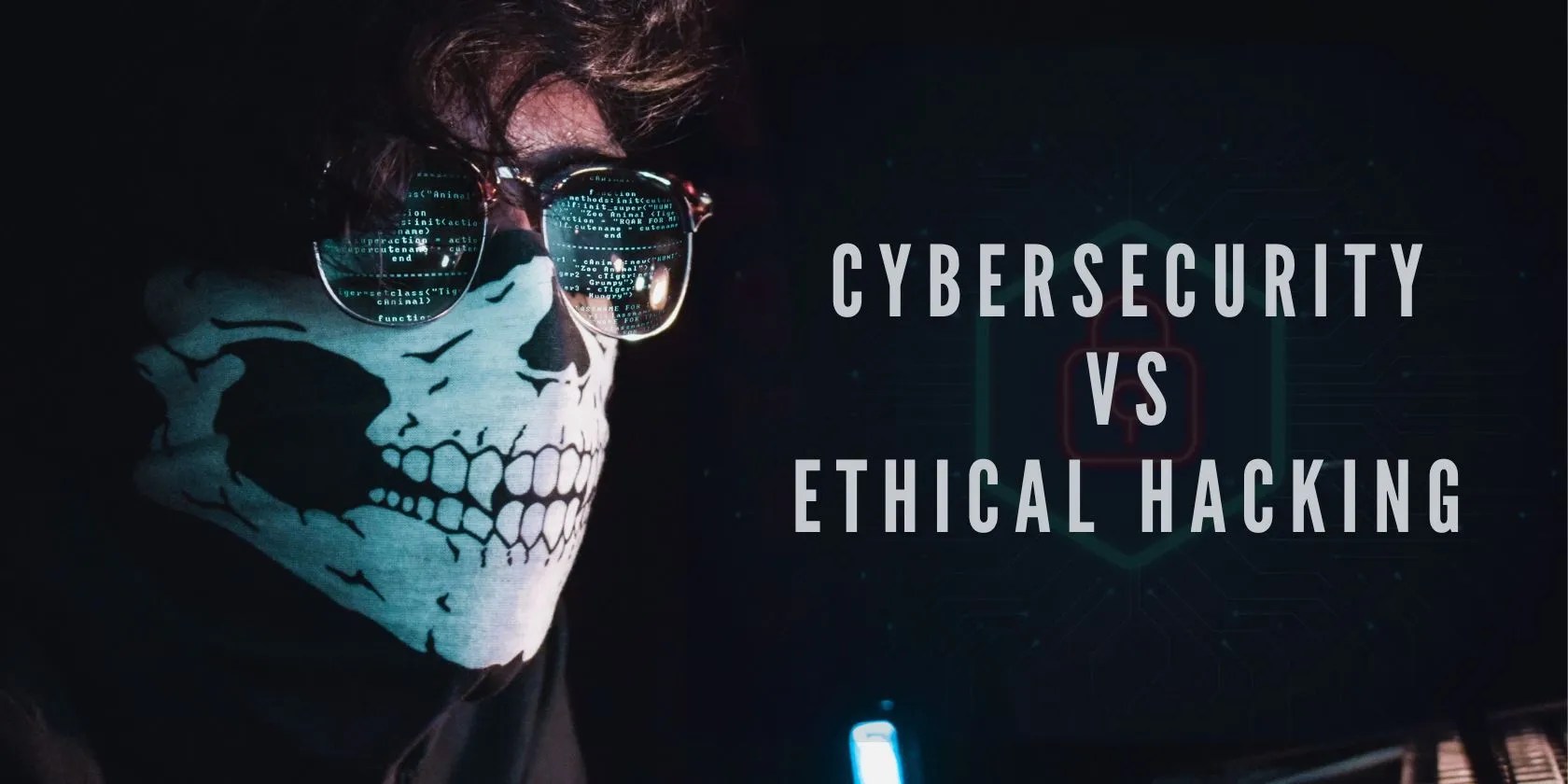
Now, from the definitions above, it is easy to opine that ethical hacking and cybersecurity are the same because they have similar objectives—to protect systems and users from malicious attacks. However, they differ from several standpoints, which we’ll discuss in detail in this section.
1. Purpose
Cybersecurity primarily focuses on protecting internet-enabled systems and networks from unauthorized access, malfunction, violations, and theft (internal or external). It is also concerned with designing strategies to minimize security risks on a system before, during, or after any attack.
Ethical hacking aims to strengthen system security by identifying and resolving exploitable vulnerabilities, giving malicious hackers little or no leverage on the system. It also arms authentic users and organizations with necessary information about specific networks and systems.

Imagine a hostile cyberattack that could have been prevented but was not. The results of ethically hacking the system beforehand can give affected users or organizations first-hand information about the root cause of the attack. And that is the first step in resolving any security issue.
2. Legal and Ethical Implications
Although hacking is highly prohibited in today’s cyberspace due to its adverse impacts, organizations can utilize ethical hacking methodologies and tools to probe into systems to discover anomalies. Nonetheless, here are some legal and ethical implications to consider:
In addition, endeavor to sign detailed contracts to define your scope of work and liability before embarking on any project.

Cybersecurity, on the other hand, also has significant legal and ethical implications due to the severity of cyber threats on individuals, organizations, and society. The following are some important legal and ethical implications of cybersecurity:
3. Tools and Techniques
Cybersecurity utilizes the following tools and techniques:
Conversely, ethical hacking uses:

4. Career Opportunities
With the growing number of cybercrimes and attacks, the need for cybersecurity professionals and ethical hackers is increasing significantly across different industries. This has led to the creation of diverse career opportunities in both fields. So, if you want tosecure a job in cybersecurity, here are some career opportunities you can explore:
On the other hand, if you want tomake a career in ethical hacking, here are a few options to consider:
5. Training and Certifications
Cybersecurity and ethical hacking are complex fields requiring several training and certifications to gain proficiency and authority. Fortunately, you can get the necessary training and earn a degree from an accredited institution (in-person or virtual).
Additionally, you may attend boot camps and workshops, read books, or binge-watchYouTube videos about cybersecurityor any related field. Furthermore, earning relevant certifications plays a crucial role in the employment ecosystem. If you’re considering going into ethical hacking, here are some popular certificates to get:
Likewise, if you want to become a cybersecurity expert, here are some professional in-demand certifications to consider besidesonline cybersecurity courses:
According toZipRecruiter, the average annual salary for an ethical hacker is around $135,000. Similarly, a cybersecurity professional earns up to $97,000 annually, as perZipRecruiter. Notwithstanding, your ideal salary depends on your skill set, experience, responsibilities, and the location of your employer. So, don’t be limited by these average salaries, as there’s room for more.
Cybersecurity vs. Ethical Hacking: A Common Ground
Despite the differences, cybersecurity professionals and ethical hackers work hand-in-hand to protect systems from compromise. For example, while ethical hackers detect exploitable loopholes, cybersecurity experts proffer security measures to address the detected and potential issues.
In other words, their objectives serve as a common ground for them to function collectively. They also share common terms, terminologies, job roles, and skills and can work in any industry of choice, including the military, as cyber soldiers.
Cyber soldiers work at the top-secret level to conduct offensive and defensive operations within the military.
Sometimes the smallest cleaning habit makes the biggest mess.
Every squeak is your PC’s way of crying for help.
It saves me hours and keeps my sanity intact.
My foolproof plan is to use Windows 10 until 2030, with the latest security updates.
My iPhone does it all, but I still need my dumb phone.
