How to Get Started With Abstract Photography: 5 Helpful Tips
Have you ever wanted to try abstract photography but are completely lost about where to begin? In this article, we’ll cover useful tips that will help you get started in one of the most fascinating genres of photography.
What Is Abstract Photography?
Abstract photography is a genre that focuses on subjects without context. This often leads to images that are perplexing without the photographer providing relevant details.
Images tend to be part of a whole, like a macro image or even a vast landscape taken from the sky that when cropped into a square, for instance, gives it a completely new identity and purpose.

Abstract photography calls attention to itself for being something distinctly apart from our normal viewing experiences in the real world. In fact, if it weren’t for the photographer creating an abstract image, there’s a good chance that such a thing would never be viewed by anyone at all.
Just like other abstract art forms like painting, abstract images may invoke feelings and thoughts, but we’re challenged as viewers to associate the work with anything ordinary.
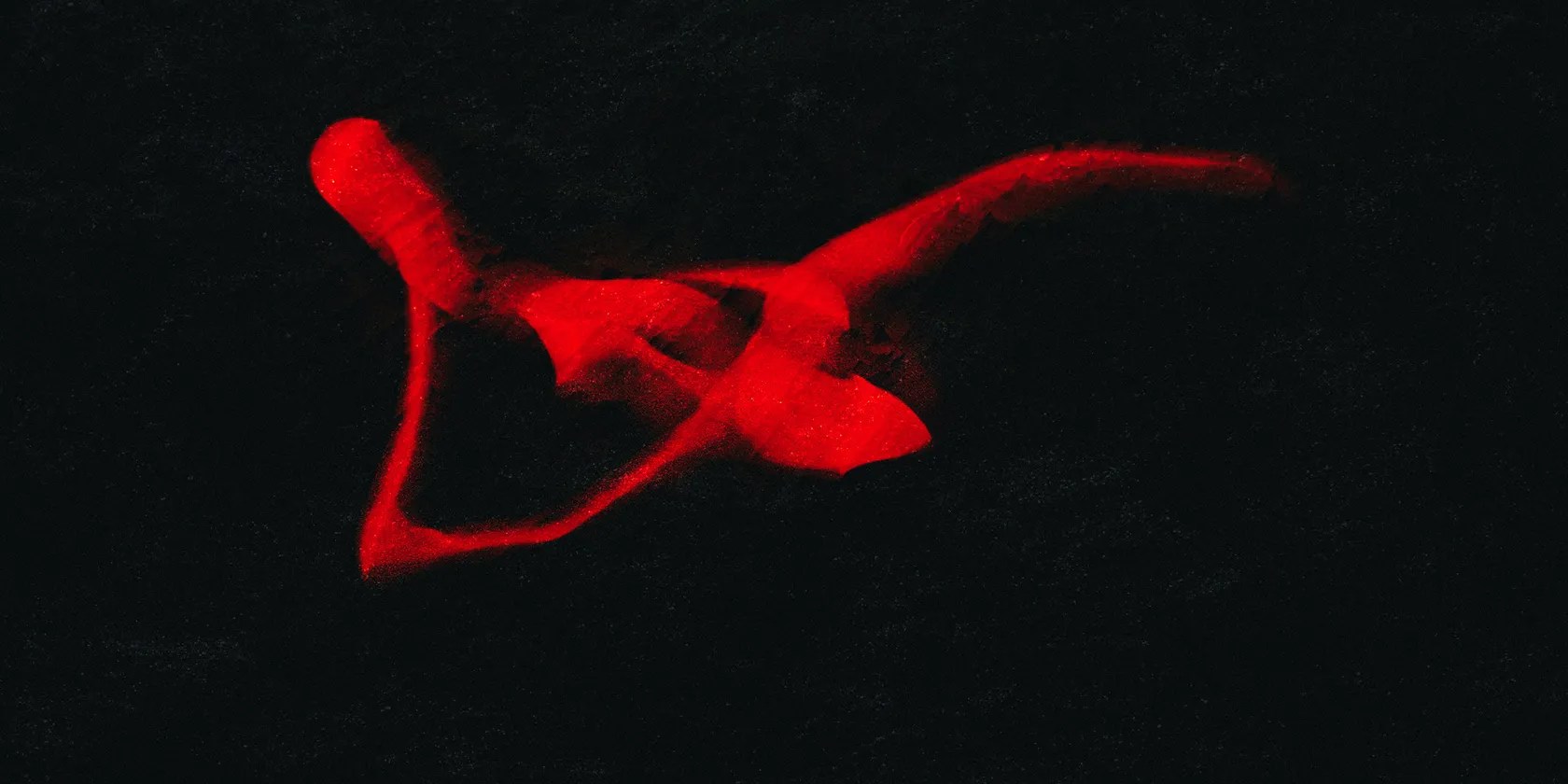
Examples of abstract photography include elements like geometric patterns, layers, textures, colors, shapes and forms, shadows, and light. These elements can be arranged in traditional or unorthodox compositions. The important thing is to think about these elements when you begin exploring abstract photography.
In short, abstract photography is a veiled piece of reality, arranged in such a way as to be called a work of art. Here are a few tips to get you started in this genre.

1. Camera Settings for Abstract Photography
Like abstract photography itself, there are no cut-and-dry rules for camera settings in abstract photography. In fact, camera settings may not be a consideration at all for some creations. But it would be helpful to discuss camera settings for beginners who need a starting point.
Regardless of whether you plan on using one or more photos in a single work of abstract photography, it’s best to approach camera settings on a subject-by-subject basis. If you’re photographing people, your settings could be quite different from shooting an abstract landscape image. We talk about thebasic camera settings that every photographer needs to understand.

But if you want to take complete control of the photographic process, consider using Manual Mode. This mode can be used for any subject and allows you to manually change the aperture, ISO, and shutter speed, among other settings. It’s always the best option when you have the time to properly photograph the subject.
2. Look for Patterns
Patterns are probably one of the best subjects to start out with in abstract photography because of the sheer abundance of them in our everyday lives. Patterns are everywhere, on our walls, floors, ceilings, and buildings. you could even find them in living things, like trees and animals. Patterns are so abundant that sometimes they’re easy to overlook.
Take, for example, the above image of a close-up photo of a simple patch of shaggy carpet. Many of us would be able to guess that it’s either carpet or the fur of some kind of animal. But if you zoom in by enlarging the image in a photo editor like Photoshop, it may take on a new identity.

This is the same image but with the image resolution increased from almost 5,000 pixels to 15,000 pixels. We then cropped it to find an interesting patch. It’s already looking more abstract, but we can take it further with a few adjustments in Photoshop.
We added three adjustment layers to the same image, a Hue/Saturation, Color Lookup, and a Curves layer. We could also change the color drastically to get an even more abstract result.
For the final image, we added a Color Fill adjustment layer with red and changed the Blend mode to Linear Light. The image is drastically different from its original. And it’s definitely an abstract image. We talk about using theLinear Light blend mode for dodging and burning in Photoshop.
This naturally leads us to our next tip: photo editing software.
3. Use Advanced Photo Editing Software and Edit on Your Computer
In abstract photography, you can take photo editing to the extreme or choose not to use it at all. Many beginners would stick somewhere in the middle where advanced photo editing software can either enhance something straight out of the camera or creatively transform your abstract images into completely different creations.
Photoshop is only one of many advanced photo editors out there that can assist you in the creation of your abstract photography. If you don’t like Photoshop,we overview the best paid Photoshop alternativesthat work just as well for creative photo editing.
There are also advanced creative photo editors like Luminar AI and Luminar Neo. We explore eachLuminar program to determine what the best version may be for you.
Regardless of which photo editor you end up using, just be sure that the features are more advanced and feature-rich than what you’d find on a smartphone. You’ll find that editing on your computer or any other large-screen device will be far more effective and rewarding.
4. Get the Right Lighting
This goes for any kind of photography, but it’s worth repeating in abstract photography: make use of favorable lighting conditions to capture the best image. This may include shooting during golden hour or using artificial light sources. Either way, avoid low-light situations whenever possible as well as indoor overhead lights.
Whatever the subject, abstract photography is best served with proper exposure. Unless your intentions are otherwise and you’re going for a specific effect, make sure you have plenty of quality light.
We talk aboutthe exposure triangleand how this can greatly enhance your photography. This doesn’t mean that your images must be bright, it simply means that your camera’s sensor has enough light to render a quality image free of noise and chromatic aberration.
5. Learn About Abstract Photographers and Artists
We mentioned that abstract photography is made up of elements like geometric patterns, layers, textures, colors, shapes, forms, shadows, and light—anything that’s a physical trait can be a subject for abstract photography.
These are the elements worth studying before you set out to create your own abstract photography. Not only that, but studying artists who create abstract art and photography can be enlightening if only to see what’s possible.
For one, you’ll be amazed at what can be done in the world of abstract art. For example, an artist like Johnny Stevens has shared some of hisabstract photography of rust on his website. Once you see some of his work, you’ll likely never look at rust the same again.
The same holds true for many other subjects. A quick image search will reveal numerous possibilities. Try “abstract shadows” or “abstract landscape photography” and see what pops up.
YouTube is also a great resource for learning about abstract photography. In this video, the presenter talks about not only the artists but the art movements that they were a part of during their lifetimes. It’s well worth checking out before you pick up your camera.
Explore Abstract Photography
Abstract photography isn’t just a bunch of squiggly lines—although it certainly can be! Abstract photos can be as rich and complex, as beautiful and inspirational, as any other photography genre. Give it a try and see if you surprise yourself.
Want to transform a photo into an abstract portrait? We’ll show you how in Photoshop.
Tor spoiled me forever.
These films will leave you questioning humanity, but also wanting more.
Turn these settings on, and your iPhone will be so much better than before.
it’s possible to block out the constant surveillance and restore your privacy with a few quick changes.
Revolutionize your driving experience with these game-changing CarPlay additions.
